
Your Guide to Safer Holiday Events
Liquor Liability: Holiday Hosting Risks
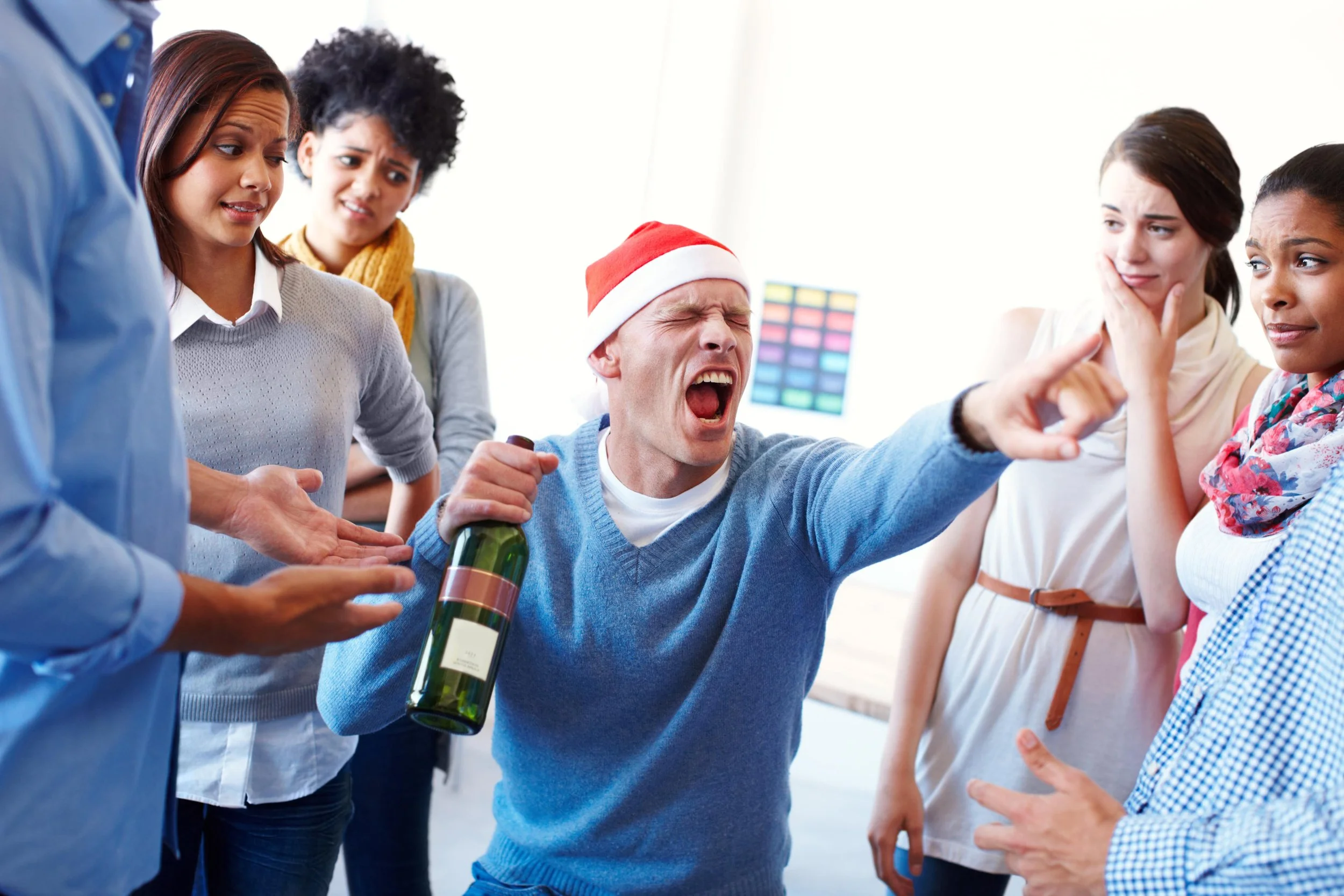
Picture this scenario: Your company celebrates its most profitable year by throwing a gala holiday party. Festivities begin with a cocktail reception at company headquarters and a lavish dinner at a nearby 5-star restaurant. Guests are the employees, key clients, and their spouses / significant others.
The company hands out recognition awards and bonus checks to top performers at the reception. Marketing Manager Jon Jordan is the evening star, receiving accolades for bringing in more business than anyone has ever generated in the firm's history. He is saluted by the CEO and praised by the new mega client he brought on board with three large commercial projects.
The alcohol is flowing. Staffing the bar is your company's shipping and receiving clerk, Bob, who had a few years of experience as a bartender during college and volunteered to pour. Appetizers included nuts, cheeses, and crackers, but nothing substantial. (You don't want folks filling up on snacks when you're about to dine at the best restaurant in town.)

Jon is having a great time. They're serving his favorite Scotch whiskey. Greetings of "Cheers" and "Salud" fill the air as co-workers bring Jon one Scotch on the rocks after another.
As the dinner hour approaches, Bob issues a last call. Jon has one more for the road and teeters toward the front door. In the lobby, he crosses paths with his new mega client's wife, Ursula.
Feeling energetic and uninhibited, Jon puts his arm around her waist and gently kisses her lips. "See you at the restaurant," he smiles, patting Ursula on the behind.
Jon jumps into his car and drives to the restaurant. On the way there, he decides he wants some "Gummie-Bears" at the Cannabis shop. He swerves into the parking lot, sideswipes a delivery truck, and rear-ends a customer's car. The driver howls in pain, clutching the back of her neck.
So, what are your company's risks? Are you liable for Jon's actions? If so, will the damages be covered by your current insurance policies? What should and could your company have done, to avoid this disastrous display? Let's look at some facts related to liquor liability for a host who provides alcohol.
Understanding Liquor Laws for Businesses
Liquor liability laws (in effect in most states and provinces in the U.S. and Canada, as well as Puerto Rico), anyone who provides alcoholic beverages to someone intoxicated or under age is liable for any property damages or bodily injuries from the intoxication. That holds whether those damages are accidental (e.g., an auto collision or a slip-and-fall) or intentional (e.g., a bar fight). Historically, liquor liability applied mostly to taverns, bars, restaurants, sporting arenas, hotels, and other establishments that sell alcoholic beverages as a profit-making venture.
Understanding Liquor Laws for Businesses
Liability may apply equally to "social hosts": organizations or individuals who provide alcohol to others in their homes or at business functions but don't regularly sell alcoholic beverages as a profit-making venture.
In our holiday party scenario, your company is responsible for being aware of Jon's intoxicated state. Jon was allowed to continue drinking, and no one stopped from driving intoxicated. Social events that include employees, clients, suppliers, and spouses/significant others are major morale boosters and build camaraderie among those key to company success.
Seven Smart Steps to Safer Celebrations
How can you serve alcohol at company functions without significantly adding to your liabilities?
Here are a few tips to consider:
1. Appoint a party planning team.
Have at least one member of management serve as chair. Include training to recognize signs of intoxication. (Some states / provinces offer certification programs for training nonprofessional bartenders and servers.) Have planning team members serve as watchdogs during the party.
2. Have the party offsite.
Rather than serving alcohol on company premises, have the party at a hotel, restaurant, tavern, or another outside establishment. You transfer much (but not all) liability to the establishment by utilizing an offsite location.
3. Limit Alcohol.
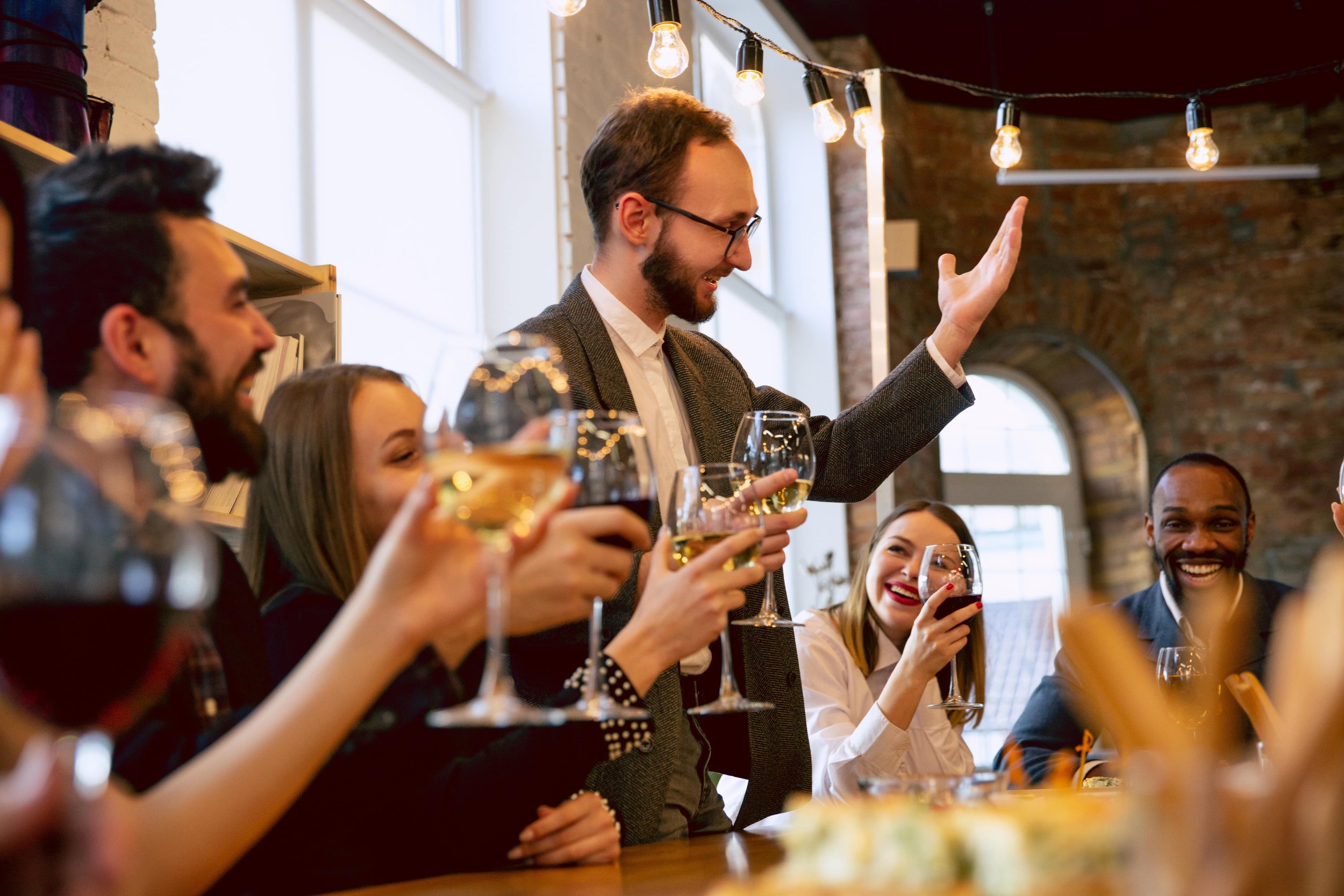
Stop or limit alcohol consumption during and after dinner, and provide desserts, coffee, or tea. You can also manage consumption by offering smaller pours, lower- alcohol options, or creative mocktails. Make water and non-alcoholic drinks easily accessible so guests can pace themselves and stay hydrated.
4. Incorporate other activities.
Include the award presentation and more charitable activities during or after dinner. Structured programming such as games, raffles, or a short presentation naturally shifts attention away from the bar. This keeps guests engaged and helps promote a positive, inclusive atmosphere throughout the evening.
5. Provide transportation.
One of the most significant liquor liabilities for social hosts is an intoxicated employee causing significant property damage and physical injury in an auto accident. Offer all employees free transportation at the end of the party. Transportation could include a taxi, a shuttle bus, a ride share like Uber or Lyft, or designated drivers from among nondrinking employees. Do not use company vehicles: Outside services are best for transferring risk. Insist that any employee showing intoxication does not get behind the wheel. Consider offering a guestroom for the night if the event is at a hotel.
6. Set the tone beforehand.
All written and verbal party invitations and announcements tell employees that responsible, moderate drinking is the rule. Consider offering a limited number of drink tickets to attendees. Emphasize to management that they should lead by example and not overindulge.
7. Please leave it to the pros.
It's typically best to hire a professional bartending service to pour alcohol from behind bar stations. Trained professional bartenders pour reasonable-sized drinks, know the signs of intoxication, check ages on IDs, and cut off drinkers who are reaching their limit. Ask for a certificate of insurance to confirm the bartending company has liquor liability insurance. Require the company to add your firm as an additional named insured on its policy and seek an indemnity for your firm. Review any indemnification agreement to ensure it doesn't transfer risk back to you.
These steps can go a long way toward preventing incidents and reducing liability at your holiday events. Even with careful planning, accidents can still occur. That is why it is essential to confirm that your insurance coverage aligns with your company’s risk exposure. Understanding what is protected and where potential gaps may exist helps ensure your business is fully prepared before the first toast is poured.
How Insurance Helps Protect Your Company
You may already be aware that your commercial general liability (GL) insurance likely includes liquor liability coverage for property damage and bodily injury. Does that mean your current GL policy is all you need to provide adequate protection as a social host of a holiday party? Not necessarily.
First off, your GL policy limits may be inadequate. Should an intoxicated employee on the way home from an office party cause an automobile accident in which someone is permanently disabled or killed, judgments can reach into the multi-millions of dollars.
Second, there may be exclusions in the policy limiting the types of activities covered. For instance, if someone in your company knowingly supplied alcohol to a minor or violated a state or local liquor statute, any damages or injuries could be excluded from coverage. Check with your insurance agent to determine the laws and statutes in your state or province, including criminal laws.
Third, do you remember our friend Jon who thought it was an excellent idea to touch the wife of his new client inappropriately? If she were to file a sexual assault case against the company, coverage would be excluded under the GL policy. Neither would racial or sexual discrimination charges are covered by insurance if a woozy employee loses their inhibitions and tells some vulgar jokes around the punch bowl.
We recommend plugging coverage gaps with an employment practices liability insurance (EPLI) policy. EPLI, with third-party coverage, is highly recommended for protection against damages and legal fees in the event of allegations of discrimination, sexual harassment, and emotional distress.
We'll be happy to review your current insurance policies and risk management practices to see where you can improve your protection against liquor liability.
We are available to provide referrals to consultants by providing guidance relative to insurance issues and even certain preventives, from construction observation to developing and applying sound human resources management policies and procedures. Please call on us for assistance. We're a member of the Professional Liability Agents Network (PLAN).
We provide the following material for informational purposes only. Before taking any action that could have legal or other significant consequences, speak with a qualified professional who can provide guidance that considers your unique circumstances.